
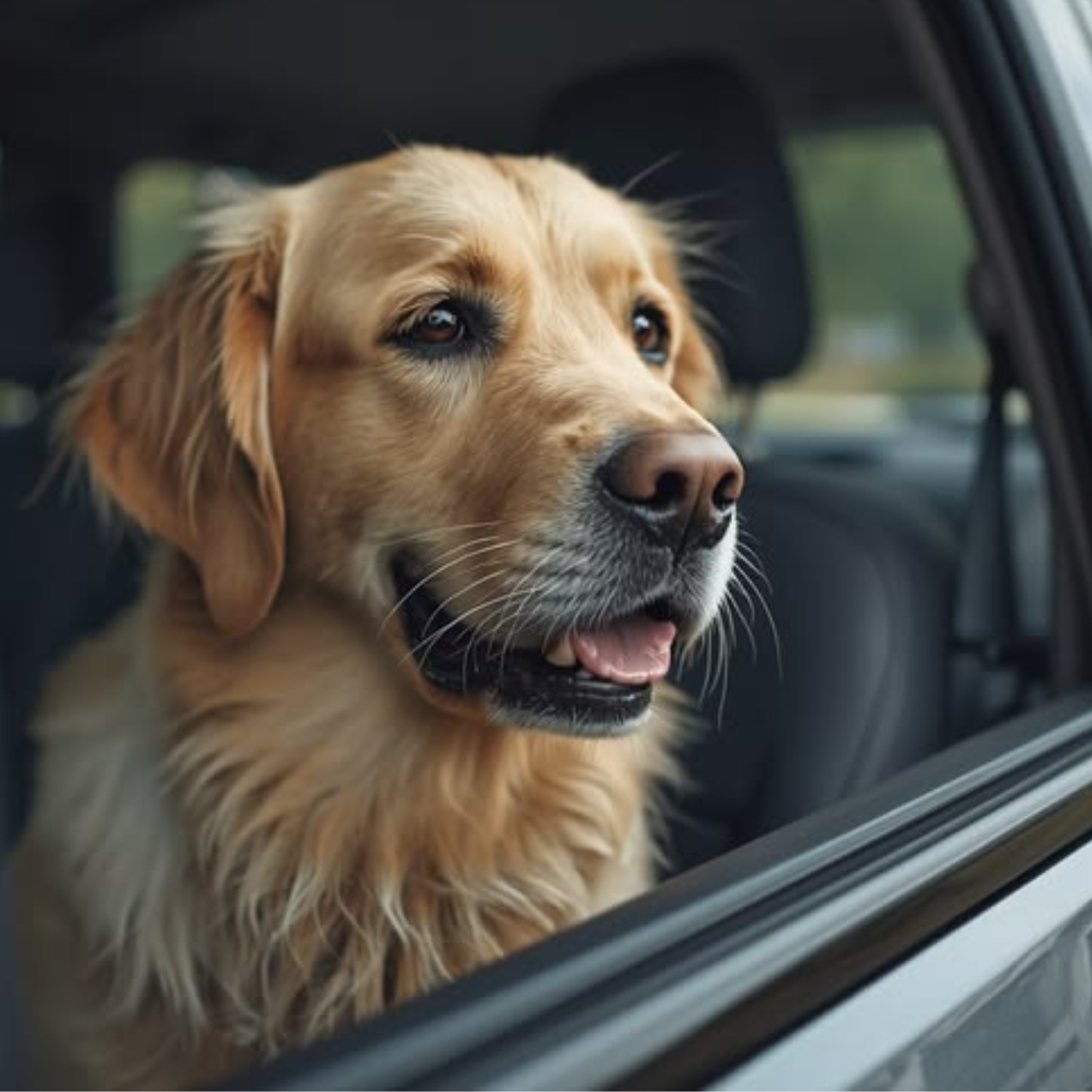
Some dogs hear the car keys and immediately lose their minds with excitement.
Tail wagging. Circling the front door. Acting like they’re off on a grand European tour when in reality it’s just a quick trip to the garden centre.
Others, however, have a completely different reaction.
The moment the car door opens, they freeze. They pace. Pant. Whine. Refuse to jump in altogether. Some spend the entire journey trembling in the back seat looking as though they’ve just been informed taxes are due.
And honestly, travel anxiety in dogs is incredibly common.
The difficult part is that many owners feel a bit helpless watching it happen. You want to take your dog on adventures, holidays, beach walks, weekend visits, or even just routine journeys without it turning into a stressful ordeal for everyone involved.
The good news?
Most dogs can become significantly more comfortable with travelling when given the right support, reassurance, and routine.
Because very often, anxious travel behaviour isn’t stubbornness or bad behaviour at all.
It’s fear. Uncertainty. Overstimulation.
And once you understand that, helping them becomes much easier.
Why Some Dogs Become Anxious During Travel
Dogs experience car journeys very differently to humans.
For us, it’s routine. For them, it can feel like a strange moving environment filled with unfamiliar sounds, vibrations, smells, motion, and unpredictability.
Some dogs associate the car with negative experiences too.
Trips to the vet. Kennels. Loud busy environments. Long journeys without breaks. If most of their car experiences have ended somewhere stressful, they naturally begin anticipating that stress the moment they get inside.
Other dogs simply struggle with motion itself.
Motion sickness can create anxiety very quickly because dogs begin associating the sensation of travelling with feeling unwell. In many cases, what looks like nervousness is actually discomfort or nausea underneath it all.
And then some dogs are just naturally more sensitive personalities.
A bit like those people who get stressed trying to parallel park whilst someone watches them.
Signs Your Dog May Be Experiencing Travel Anxiety
Not all anxious dogs react dramatically.
Some signs are quite subtle initially, including:
- Excessive panting
- Whining or barking
- Restlessness
- Pacing inside the car
- Trembling
- Refusing to get in
- Excessive drooling
- Yawning repeatedly
- Lip licking
- Trying to hide
- Vomiting or nausea
- Clingy behaviour before journeys
Some dogs even begin showing anxiety before the journey starts — the moment they hear keys jingling or see you picking up a travel lead.
That anticipation is usually a sign they’ve already built a negative association with travel itself.
Start By Making The Car Feel Safe Again
One of the best things you can do is remove pressure entirely for a little while.
Not every car interaction needs to involve a journey.
Sometimes it helps simply allowing your dog to sit inside the parked car calmly with no engine running. Bring treats. Sit with them. Let them sniff around and relax without immediately driving off somewhere.
The goal is helping them realise:
“Alright… maybe this place isn’t always stressful.”
For particularly anxious dogs, rebuilding confidence gradually often works far better than forcing frequent long journeys too quickly.
Tiny positive experiences add up.
Keep Your Own Energy Calm
Dogs are astonishingly good at reading us.
If you become tense before journeys because you’re anticipating chaos, your dog often picks up on that energy immediately.
Try to keep departures calm and matter-of-fact.
No dramatic goodbyes. No frantic fussing. No “oh dear, here we go again”.
The calmer you appear, the more secure your dog tends to feel.
Think steady reassurance rather than emotional panic management.
Your dog is essentially borrowing confidence from you.
Comfort Makes A Huge Difference
Sometimes the smallest adjustments completely change how dogs experience travel.
A few things that genuinely help:
- A secure dog seatbelt or travel crate
- Familiar blankets with comforting scents
- Keeping the car cool and ventilated
- Soft background music
- Avoiding loud sudden noises
- Smooth driving without harsh braking
- Frequent breaks during longer trips
And if your dog only travels occasionally, starting with shorter pleasant journeys can help massively.
A quick drive followed by a fun walk or treat stop begins shifting the association from:
“Car = stressful” to “Car = something good happens afterwards.”
Which is exactly what you want.
Exercise Before Travelling Can Help
A dog with pent-up energy is often far more reactive during travel.
Giving your dog a proper walk or gentle exercise session beforehand can help release nervous energy and encourage a calmer state of mind before getting in the car.
Not overly intense exercise, mind you.
You don’t want them exhausted or overheated before travelling. Just relaxed and mentally settled.
A good sniff-heavy walk beforehand works wonders for many anxious dogs.
Natural Calming Support May Help Nervous Travellers
For dogs who struggle significantly with travel anxiety, many owners choose calming wellness support as part of their routine before journeys.
Particularly during:
- Long car rides
- Holidays
- Vet visits
- Moving house
- Busy travel periods
- Unfamiliar environments
The aim isn’t to make dogs drowsy or “switch them off”.
It’s helping them feel more emotionally settled and less overwhelmed by the experience around them.
When paired with positive reinforcement, calm routines, and gradual exposure, natural calming support can make journeys feel far more manageable for sensitive dogs.
At Mr. Coopers, we understand that when your dog is distressed, you feel it too. Nobody enjoys seeing their companion frightened or uncomfortable over something that should simply be part of everyday life.
Don’t Expect Overnight Perfection
This part matters.
Travel anxiety usually improves gradually rather than instantly.
Some journeys will go brilliantly. Others may still feel difficult despite your best efforts. That’s perfectly normal.
Confidence is built through repetition, consistency, and positive experiences over time.
And honestly, sometimes progress looks very small at first.
A dog who finally settles after ten minutes instead of trembling the entire journey? That’s progress.
A dog willingly getting into the car without hesitation? Massive progress.
Celebrate the little wins.
Because for anxious dogs, those little wins are actually quite big ones.
The Goal Isn’t Perfect Travel - It’s A More Comfortable Experience
At the end of the day, most dogs don’t need to become fearless road-trip enthusiasts.
They simply deserve to feel safe.
Safe enough to travel comfortably. Safe enough to enjoy new places. Safe enough to trust that they’re alright, even when the environment around them changes.
And with patience, reassurance, routine, and the right support, many anxious dogs genuinely can learn that journeys aren’t something to fear after all.
In fact, some eventually end up loving them.
Though admittedly, they’ll still insist on acting as if the window is entirely theirs.


Leave a comment
This site is protected by hCaptcha and the hCaptcha Privacy Policy and Terms of Service apply.